
Advanced, live AI engineering programme
Full Stack AI Agent Developer
Design, build, evaluate and deploy production AI agent applications.
Build full-stack agent systems with Python, FastAPI, LangGraph, RAG, PostgreSQL, MCP, evaluation, security and deployment, then ship a portfolio-ready capstone with a working web interface.
Designed for learners with prior programming exposure.
₹69,999
inclusive of GST
MRP ₹1,29,999
You save ₹60,000 (46% off)EMI starting from ₹7,778/month. Eligibility and terms apply.
Technical readiness
Confirm that this advanced programme matches your starting point
This is not a no-code beginner course. Learners without Python experience must complete the pre-course Python bridge before the main programme.
- Starting level
- Prior programming logic or coding exposure is strongly recommended.
- Coding
- The programme uses Python services, tests, APIs and a Next.js/React interface.
- Laptop
- 16 GB RAM is recommended; a dedicated local GPU is not required.
- Practice
- Plan eight to twelve hours per week outside live classes.
- External costs
- Selected model APIs, cloud GPUs, databases and hosting may require separate credits.
Production engineering outcomes
Develop the engineering capability behind reliable AI agents
Move beyond chatbot demos by combining software engineering, retrieval, orchestration, evaluation, security, observability and deployment.
Built for technical learners
Designed for people ready to engineer complete AI applications
This is not a no-code beginner course. Complete the pre-course Python bridge if you have programming experience but limited Python exposure.
Guided engineering builds
Build twelve increasingly complete AI systems
Each build adds another production concern, from typed Python services and evaluation through RAG, fine-tuning, stateful agents, MCP and a deployed full-stack capstone.
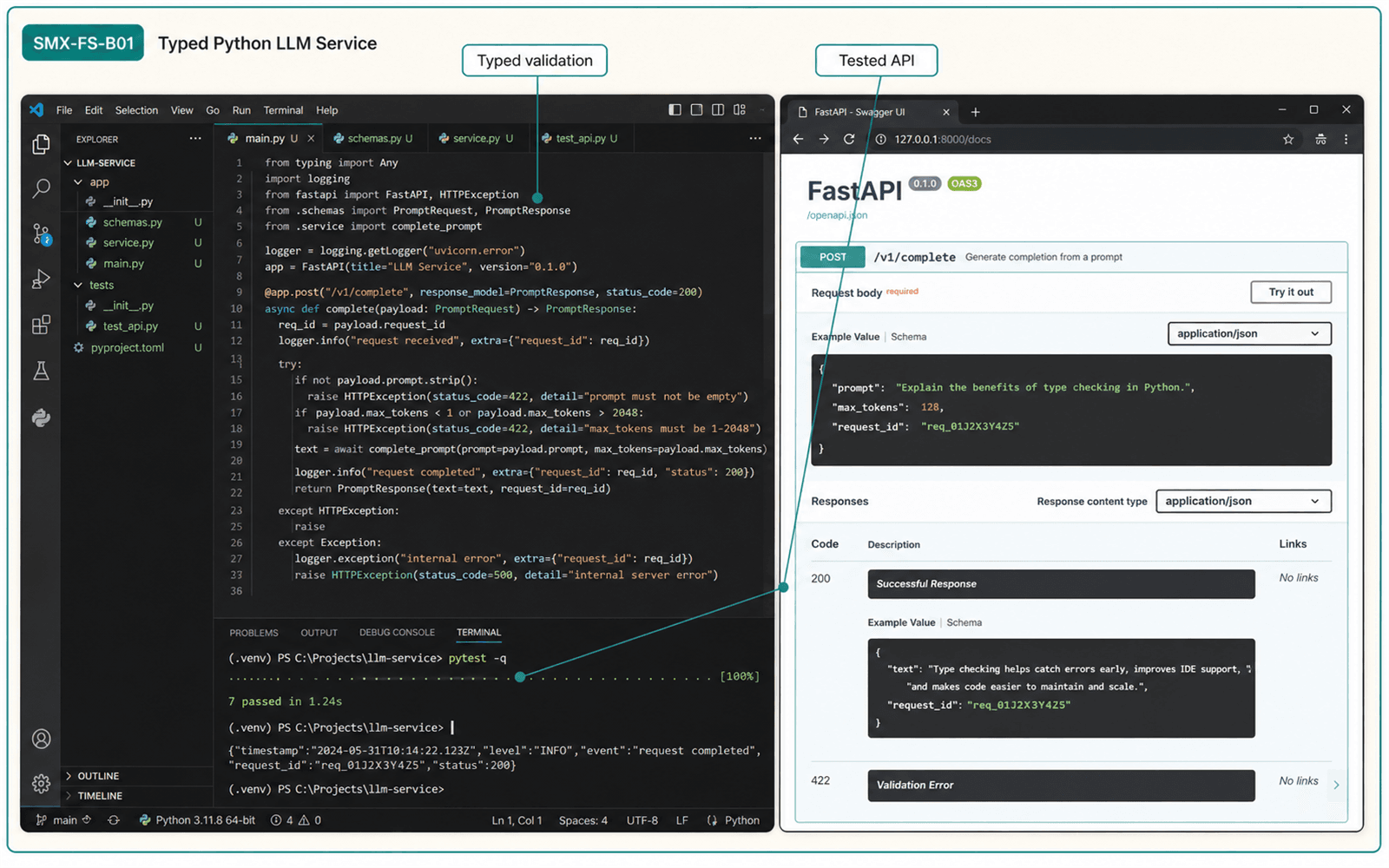
You leave with: A tested service foundation suitable for larger AI applications.
Illustrative project output. Interfaces and platform versions may change.
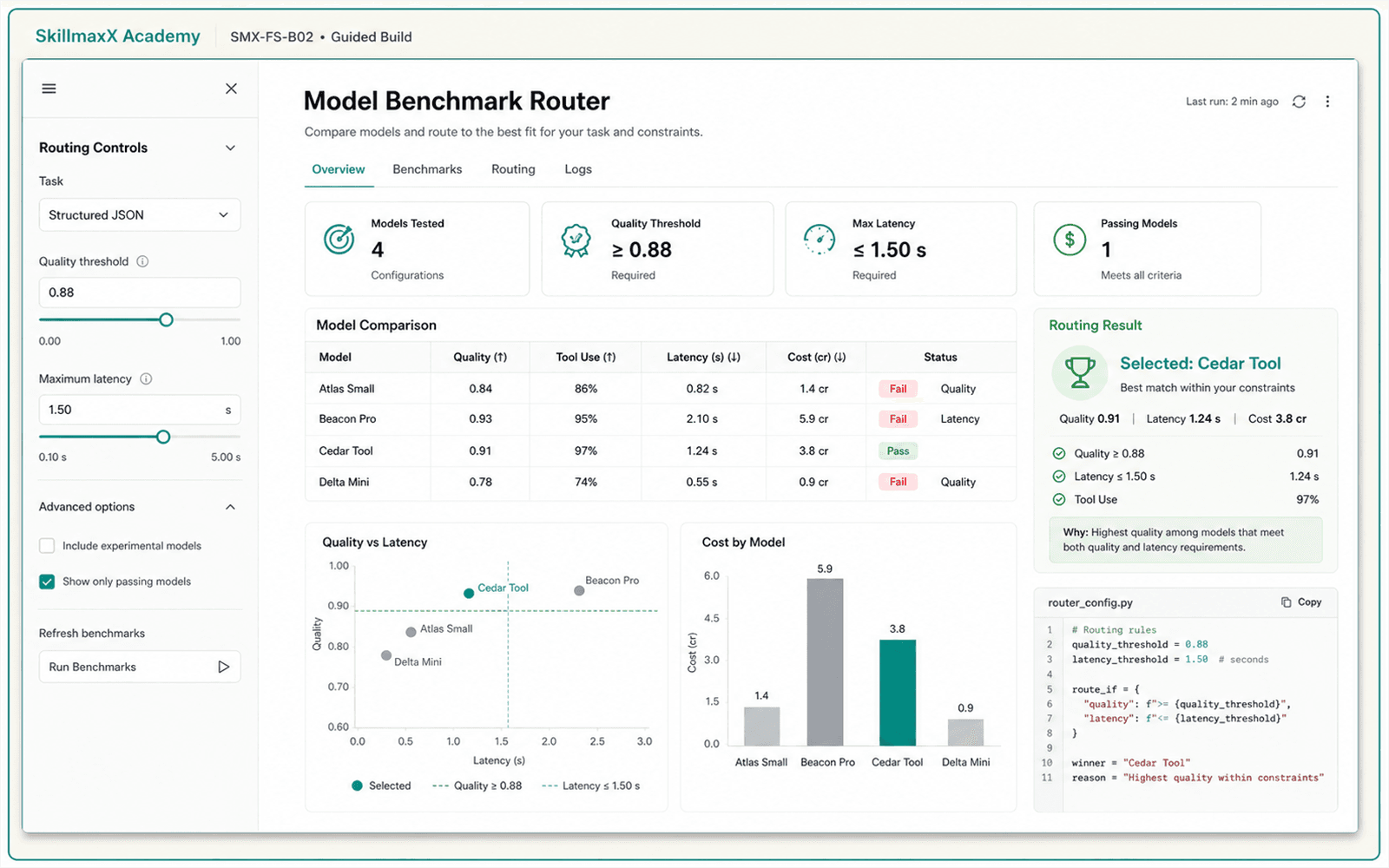
You leave with: A measured model-selection workflow rather than a preference-based choice.
Illustrative project output. Interfaces and platform versions may change.
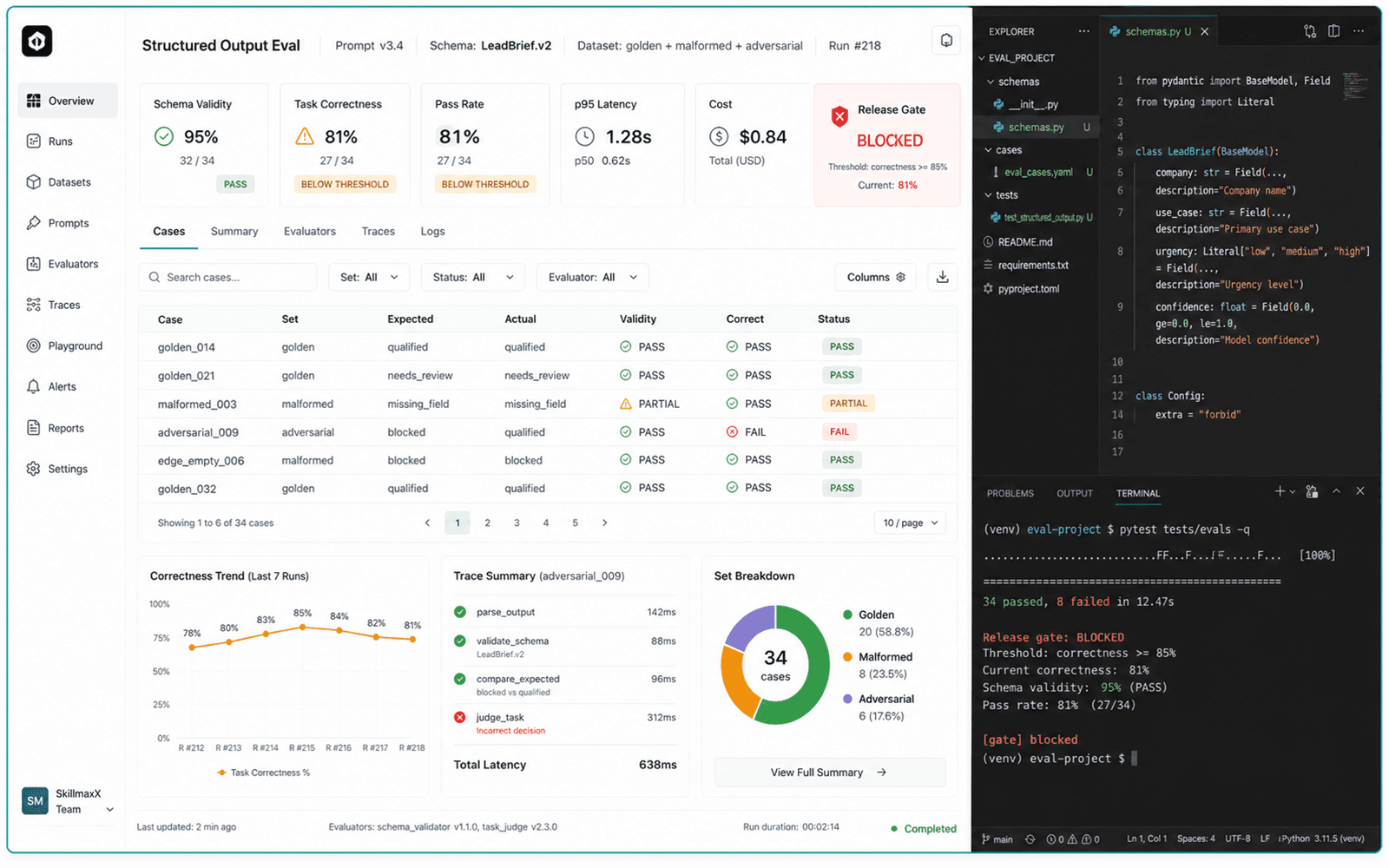
You leave with: A release gate that catches output regressions before deployment.
Illustrative project output. Interfaces and platform versions may change.
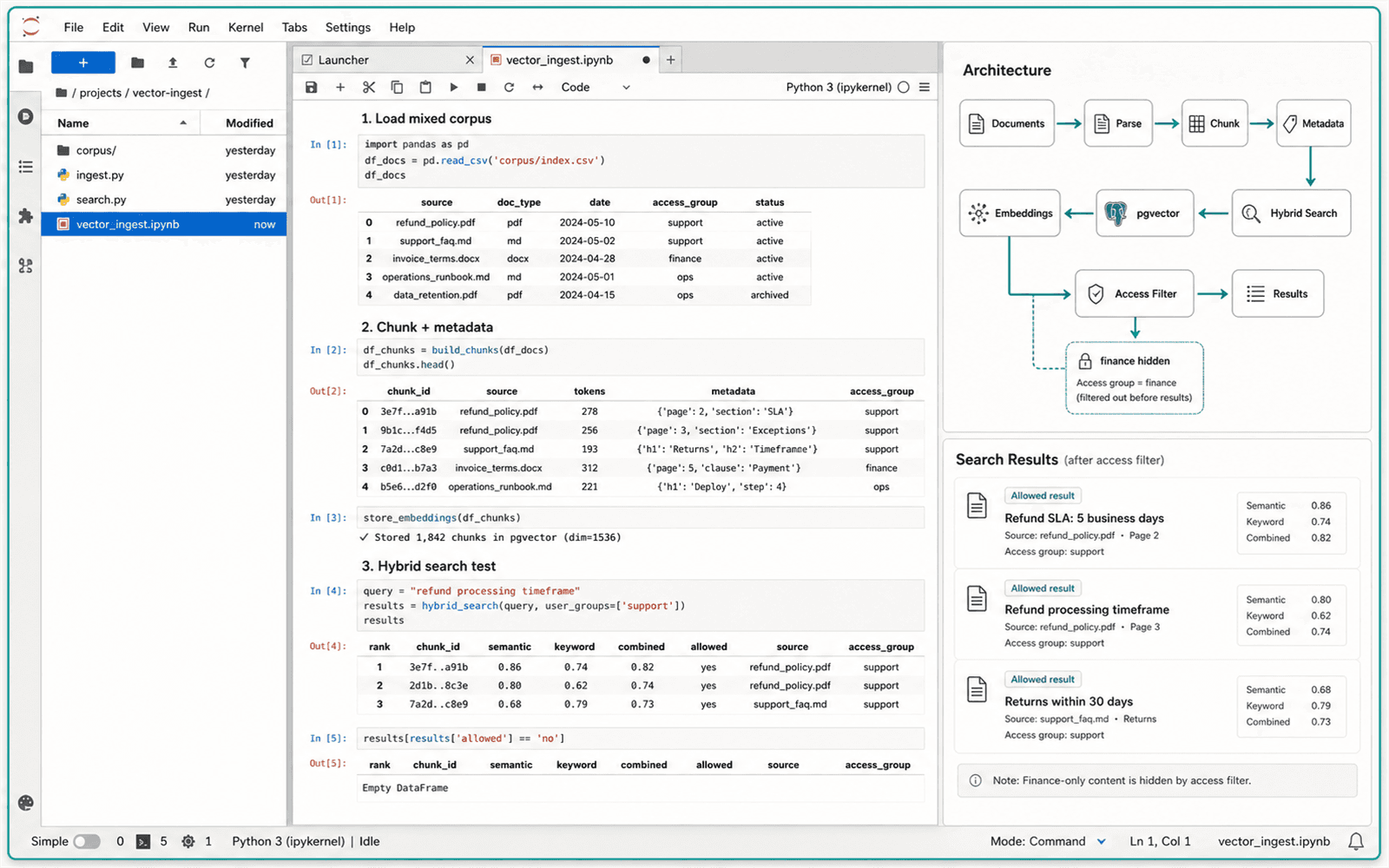
You leave with: A searchable knowledge layer with metadata-aware retrieval.
Illustrative project output. Interfaces and platform versions may change.
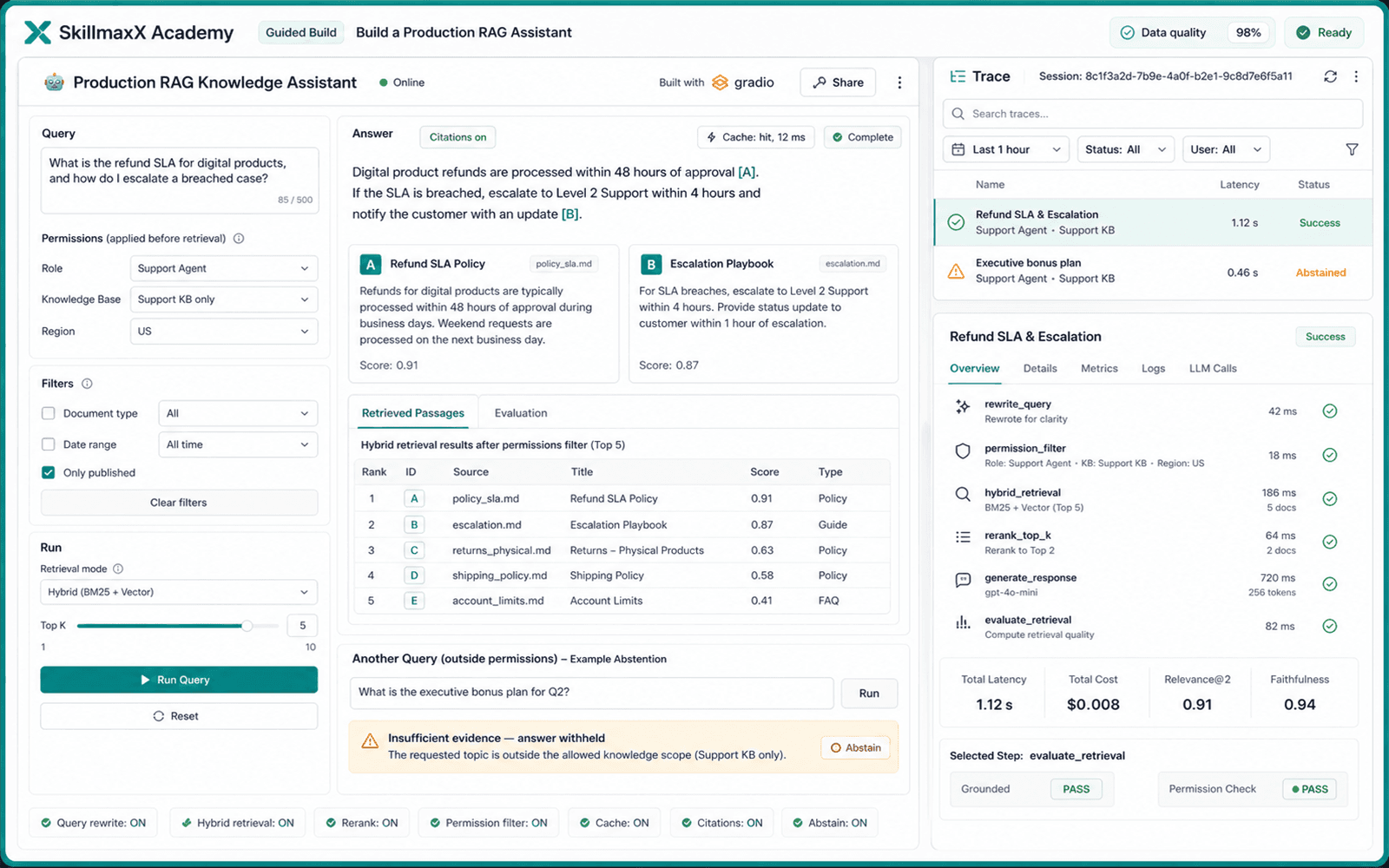
You leave with: A grounded assistant whose retrieval and answers can be inspected.
Illustrative project output. Interfaces and platform versions may change.
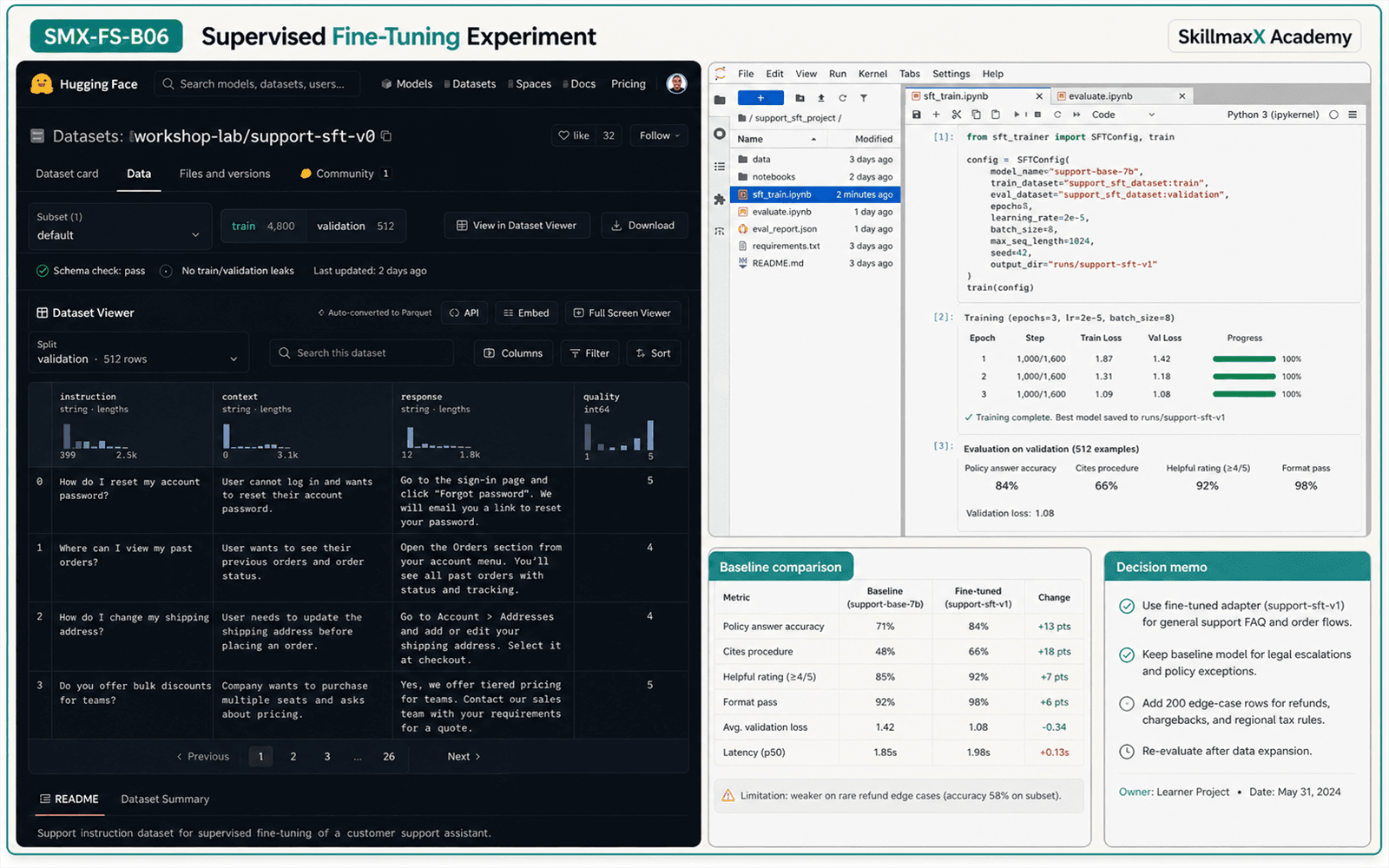
You leave with: An evidence-based decision about whether fine-tuning improved the task.
Illustrative project output. Interfaces and platform versions may change.
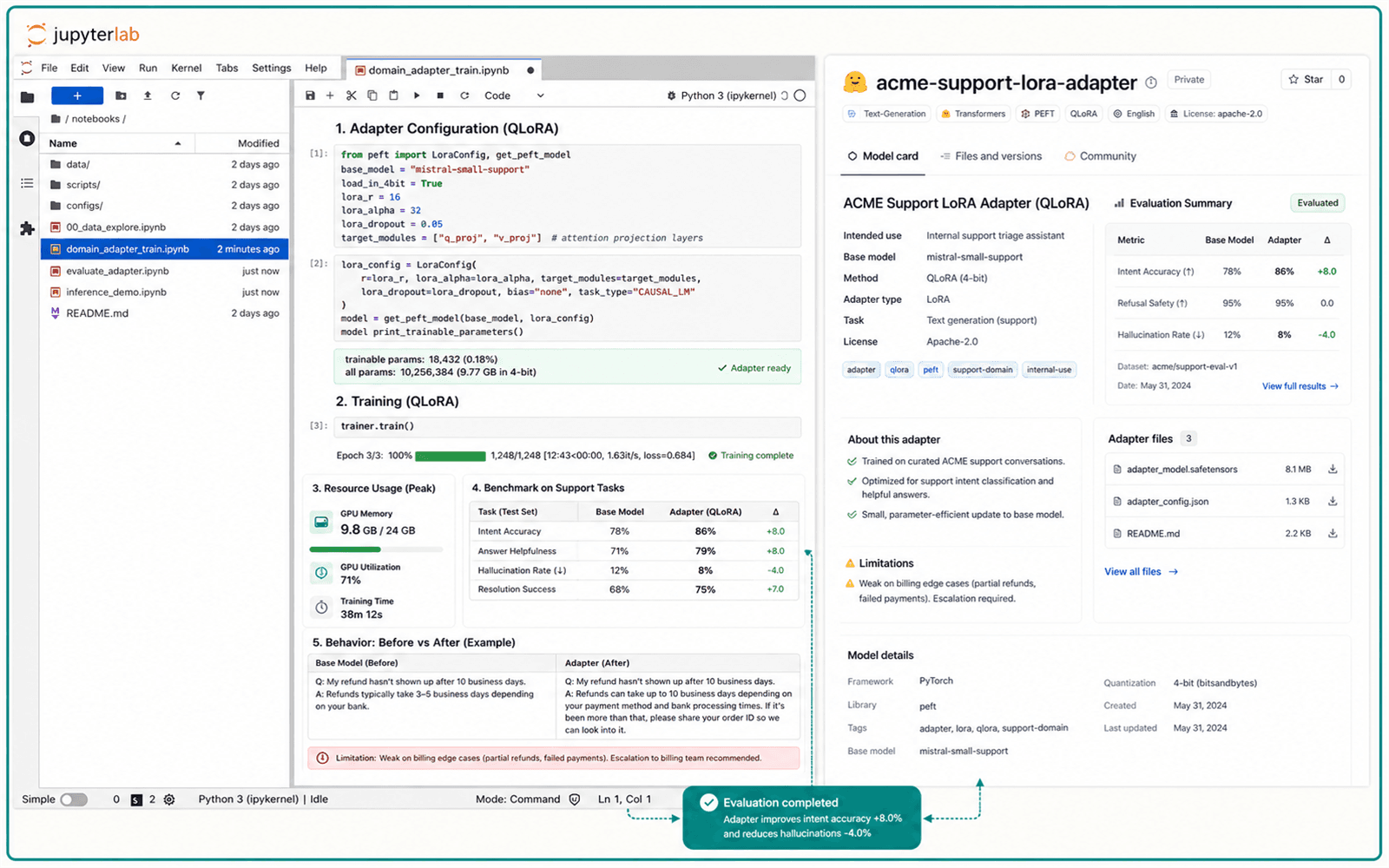
You leave with: A reproducible adapter experiment with documented trade-offs.
Illustrative project output. Interfaces and platform versions may change.
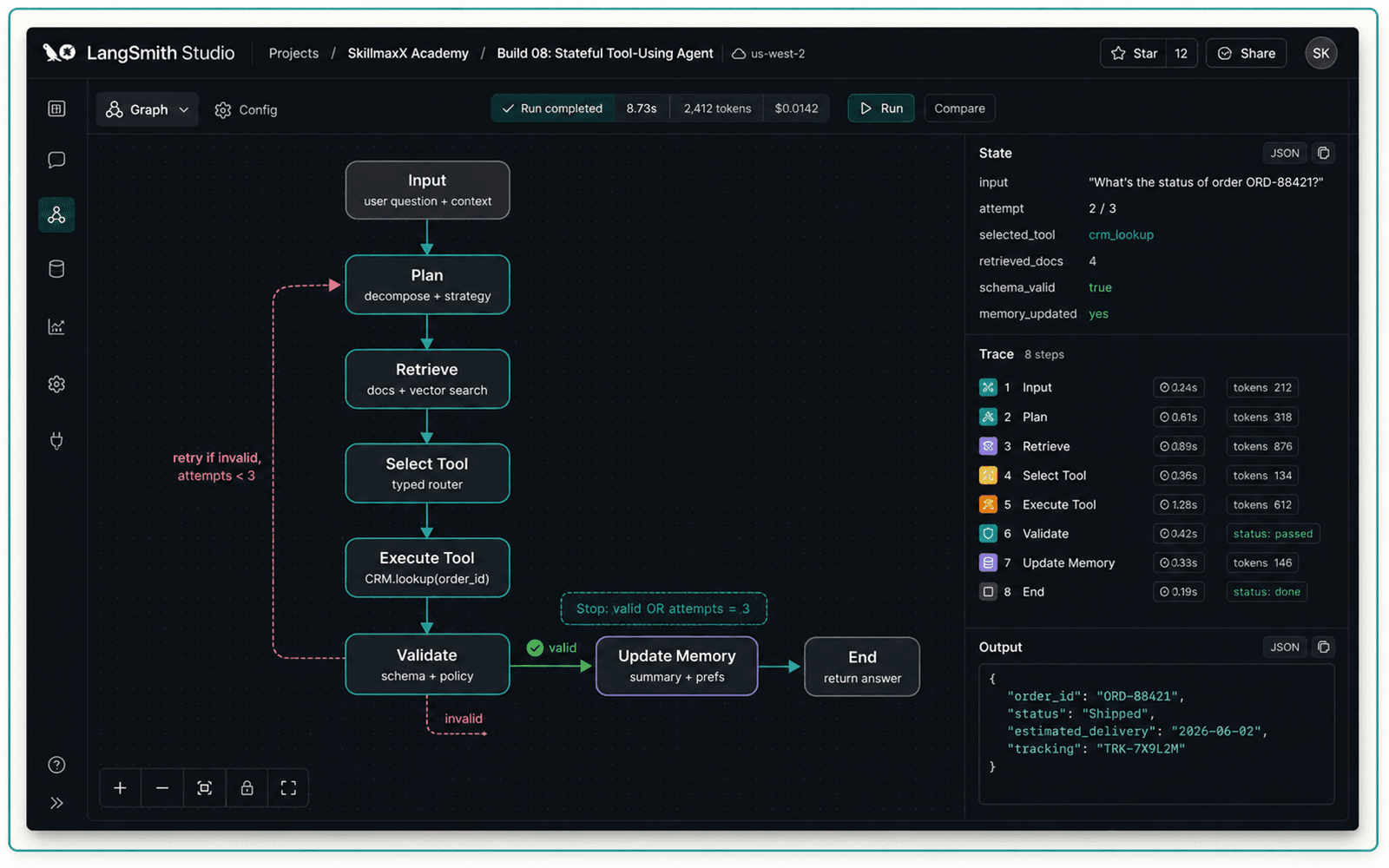
You leave with: An inspectable agent graph with bounded, testable behaviour.
Illustrative project output. Interfaces and platform versions may change.
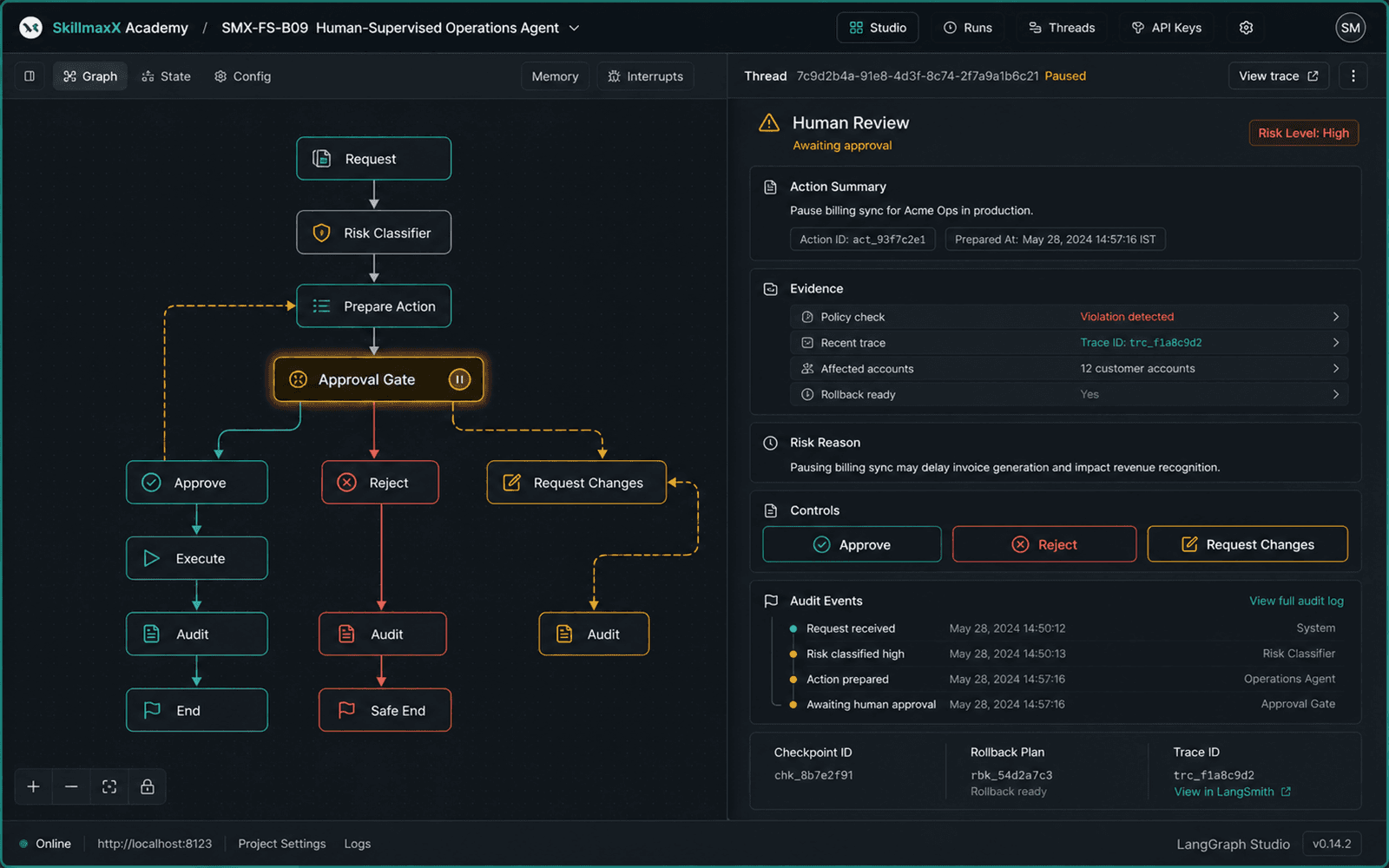
You leave with: A durable workflow that pauses safely before high-risk actions.
Illustrative project output. Interfaces and platform versions may change.
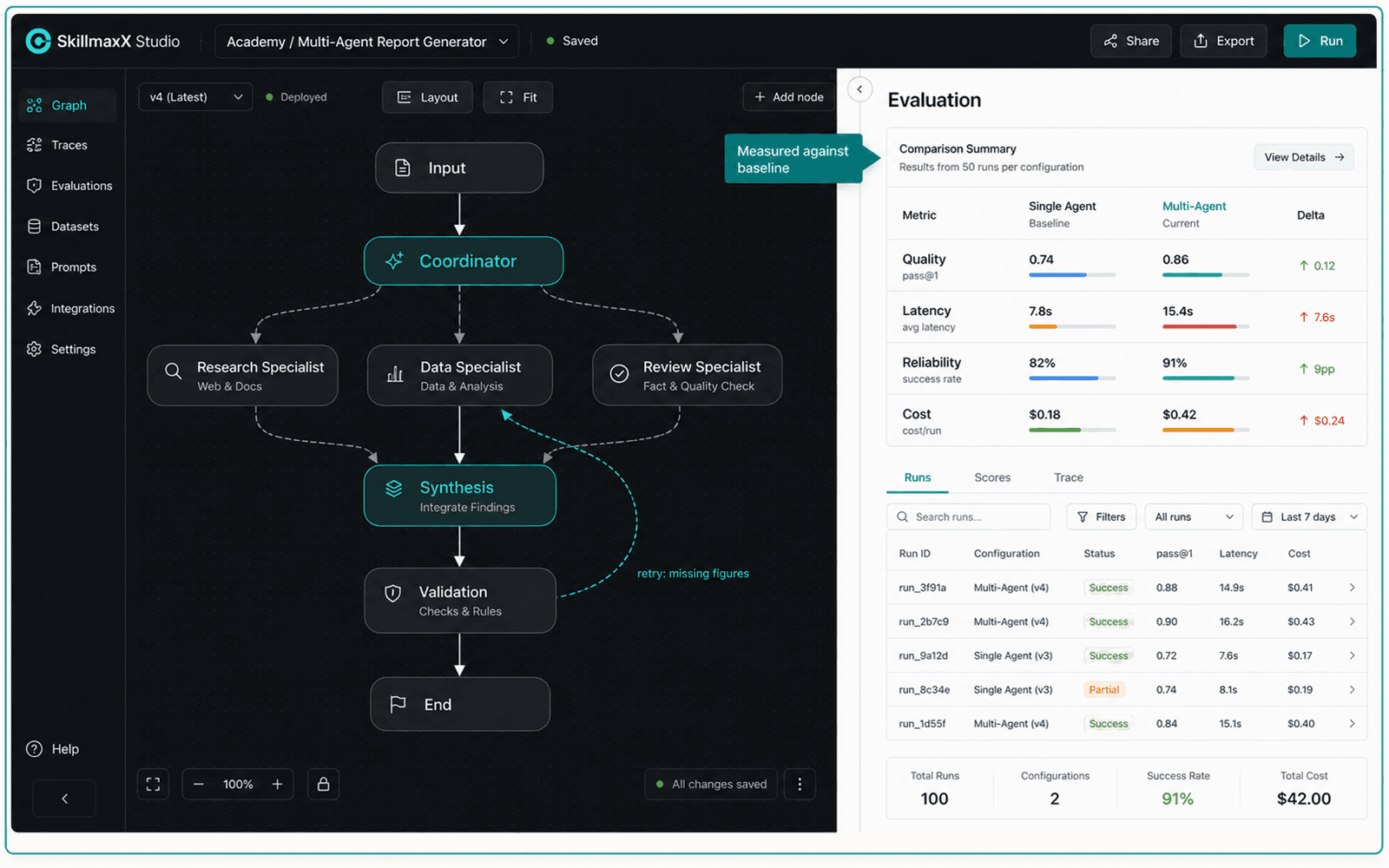
You leave with: A benchmark showing whether added orchestration is actually justified.
Illustrative project output. Interfaces and platform versions may change.
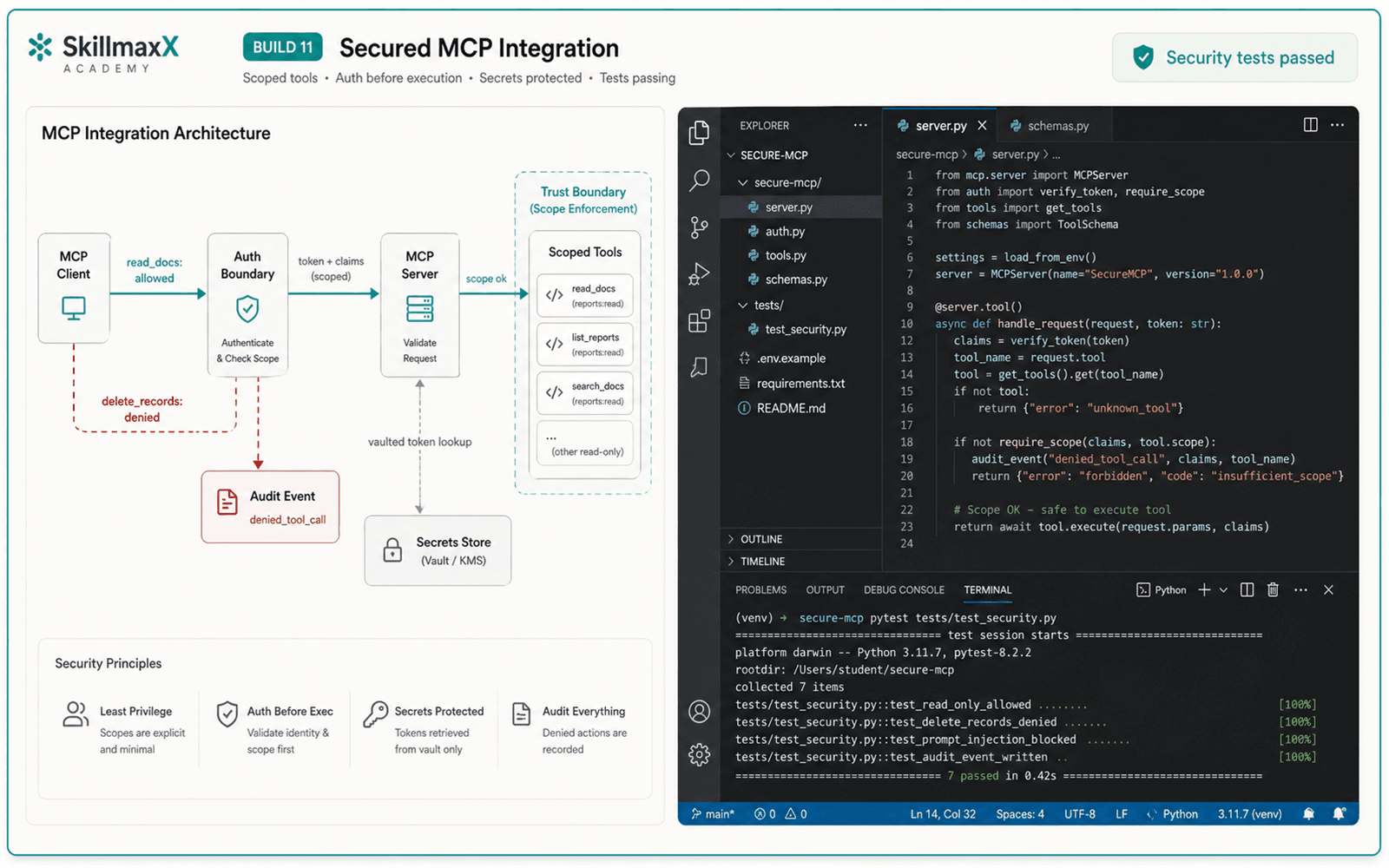
You leave with: A least-privilege tool integration with documented threats and controls.
Illustrative project output. Interfaces and platform versions may change.
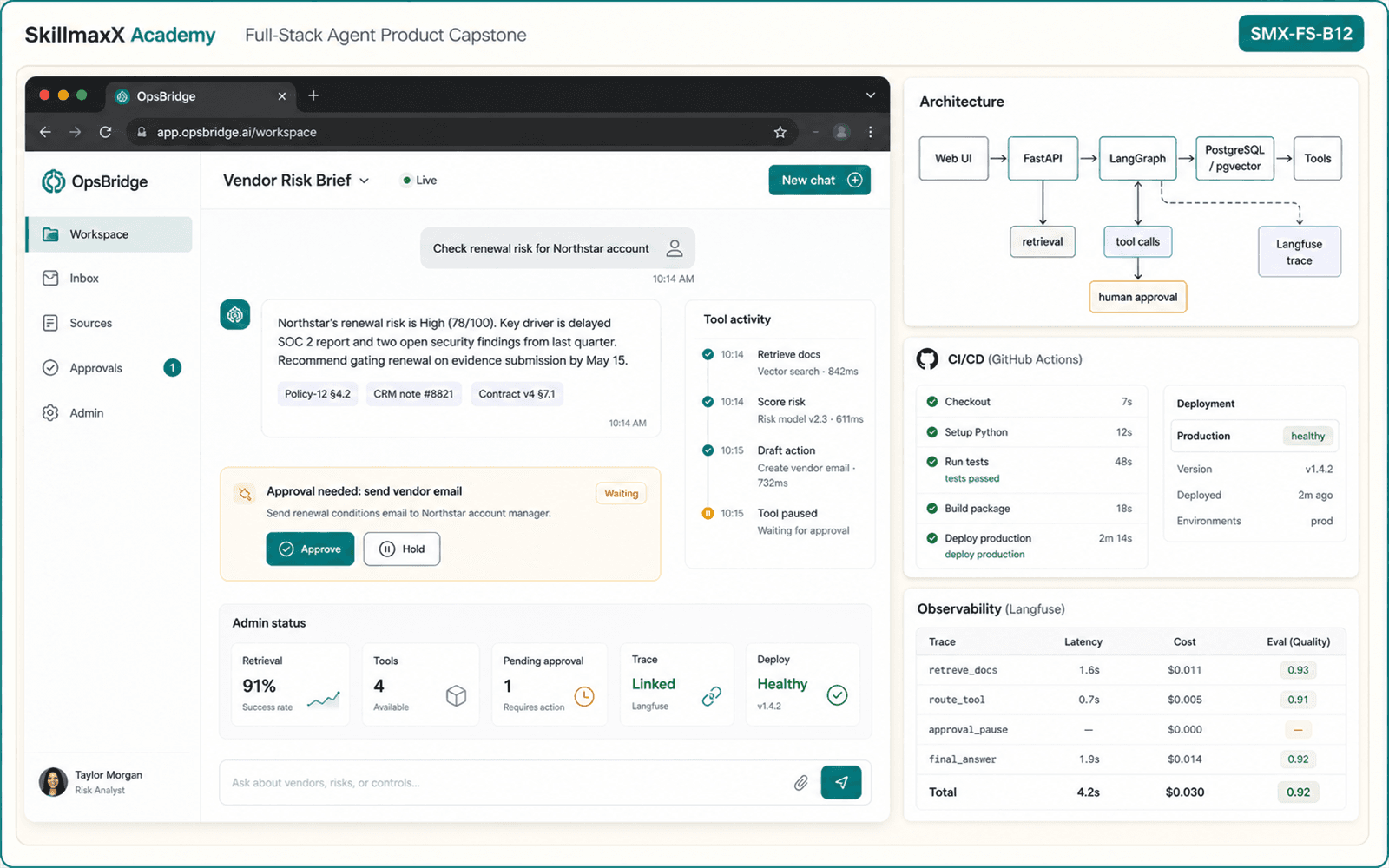
You leave with: A deployed product, architecture case study and operating runbook.
Illustrative project output. Interfaces and platform versions may change.
Your learning platform
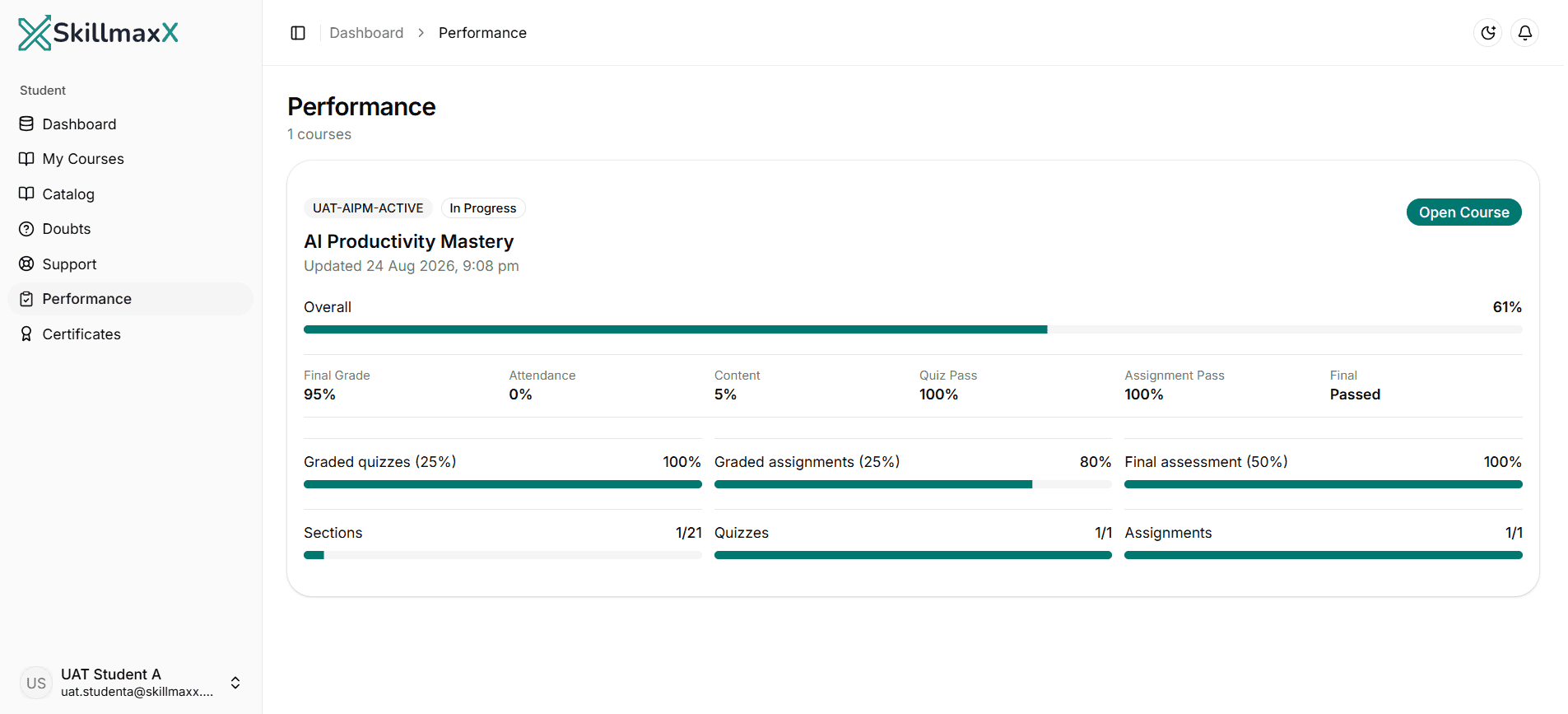
Live classes end. Your learning workspace remains available.
Return to the SkillmaxX LMS for approximately one year to review recordings, revisit course material, download working resources and continue improving your guided builds.
Course dashboard
See your course, live sessions and learning access in one place.
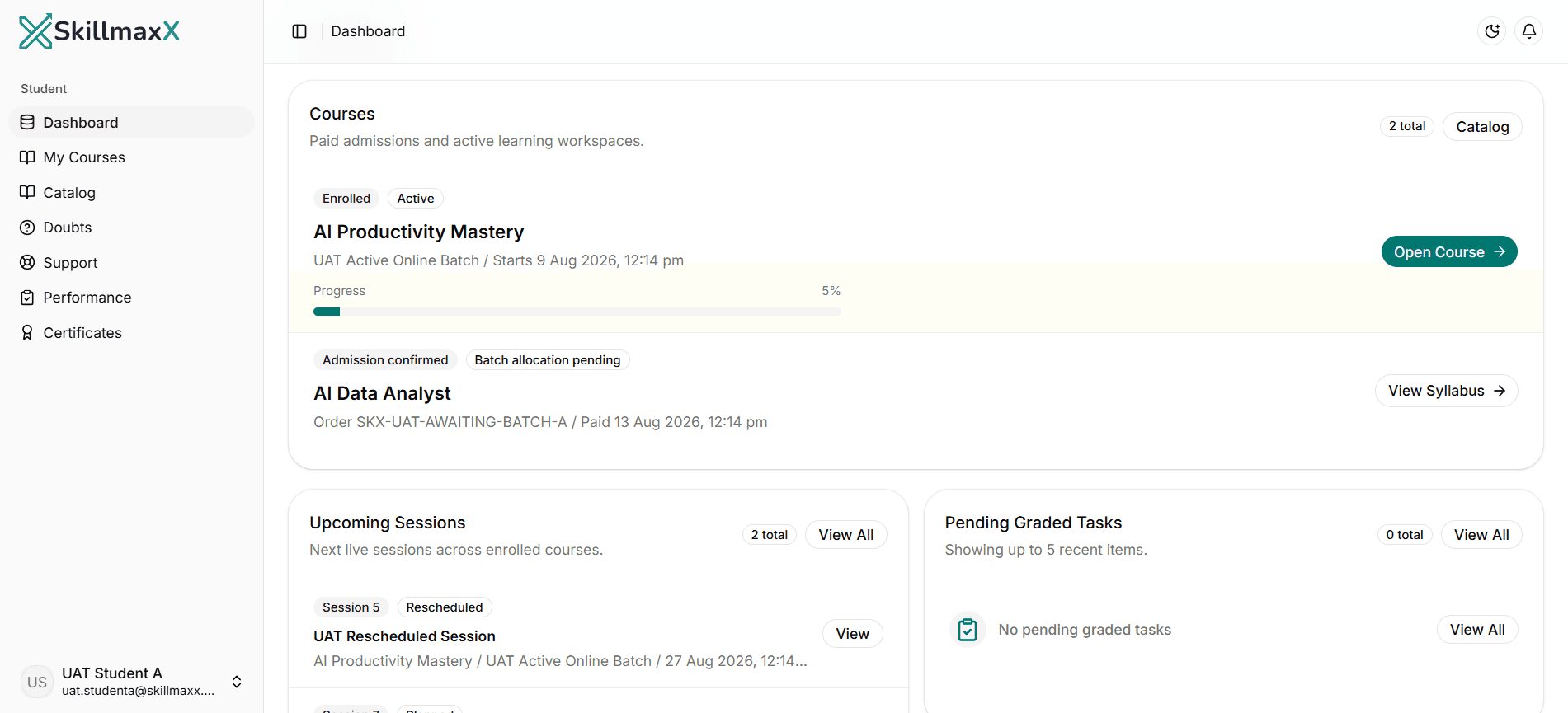
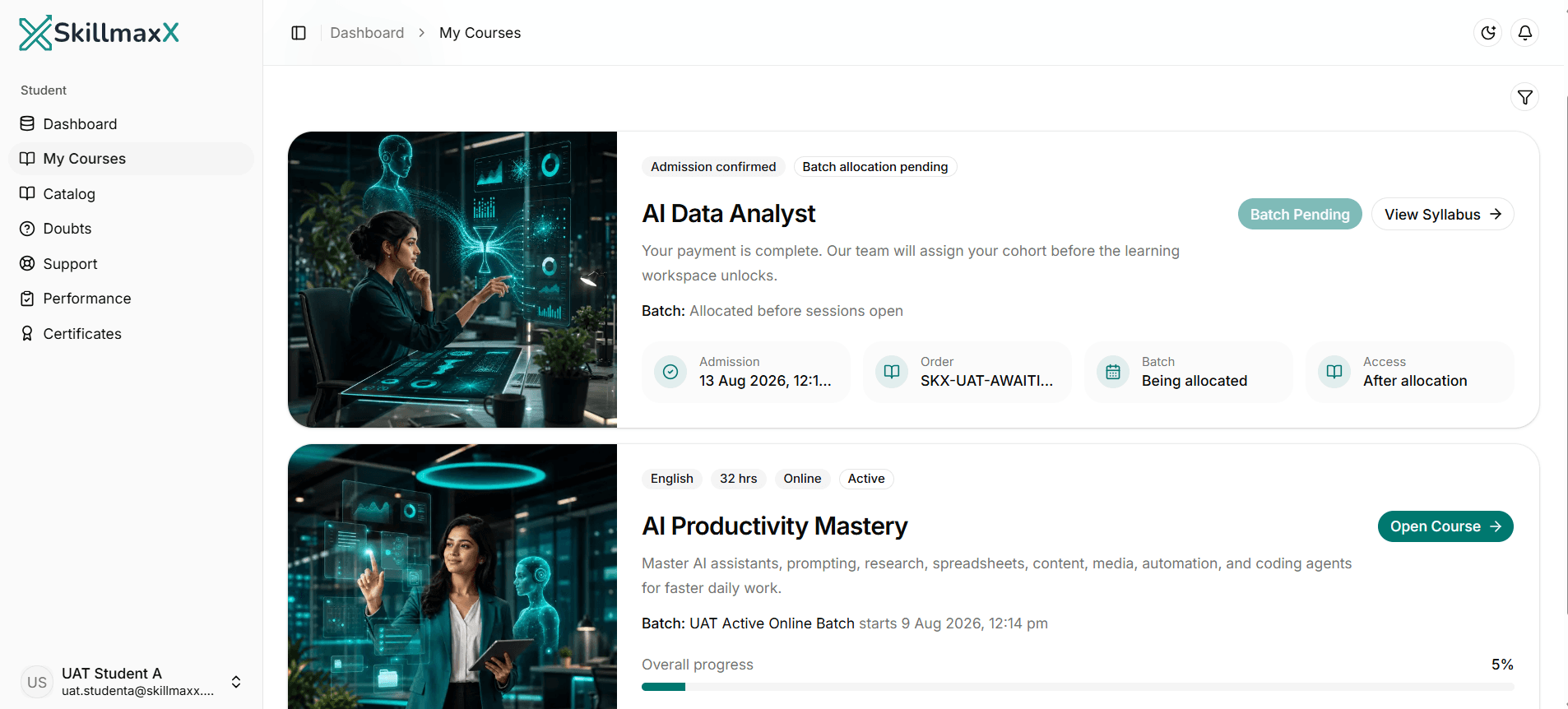
Live + LMS
How your learning works

Your instructor
Learn through architecture, code, testing and deployment evidence
Munir Suri
Founder & Lead Instructor - SkillmaxX Academy
Engineer | IIM Kozhikode alumnus | Former Director, A.T. Kearney | Full Stack Development, IIT Madras | Digital Marketing, ISB Hyderabad
Munir Suri combines management education, transformation experience and formal full-stack development study. The programme connects technical architecture with product decisions, operating constraints and clear documentation.
Sessions use working code, build walkthroughs, evaluation results and failure analysis so learners understand why an implementation is reliable, not merely that a demo ran once.
Munir leads the software-engineering, agent-architecture, integration and capstone work through live implementation and review.
Five engineering phases
Detailed curriculum
Progress from Python services and model integration through retrieval, fine-tuning, stateful agents, security and a deployed full-stack product. 144 structured learning units are included.
Phase 1 · Software, models and evaluation
Phase 2 · Retrieval engineering
Phase 3 · Model adaptation
Phase 4 · Stateful and multi-agent systems
Phase 5 · Security, full stack and operations
Production stack
Use a focused core stack, then compare specialised alternatives
The programme goes deep on Python services, LangGraph, PostgreSQL, evaluation and deployment. Other frameworks are compared where they sharpen an engineering decision.
Core production stack
Specialised and compared components
Models, datasets and fine-tuning
Evaluation and state
Agent frameworks compared
Vector platforms compared
Rapid interfaces and deployment
Protocols and security
Frameworks and model providers evolve. The programme preserves durable architecture around state, tools, retrieval, evaluation, approvals, security and observability.
A complete engineering programme
What your course fee includes
Requirements and costs
Confirm your technical readiness before joining
Prior programming logic or exposure to Python, JavaScript, Java, C++ or another language is strongly recommended.
Learners without Python experience must complete the pre-course Python bridge before the main programme.
Comfort with files, a terminal, APIs, JSON and Git is helpful.
A laptop with at least 16 GB RAM is recommended; a dedicated GPU is not mandatory.
Plan eight to twelve hours of practice per week outside live classes.
Be prepared to read code, debug failures, write tests and document projects.
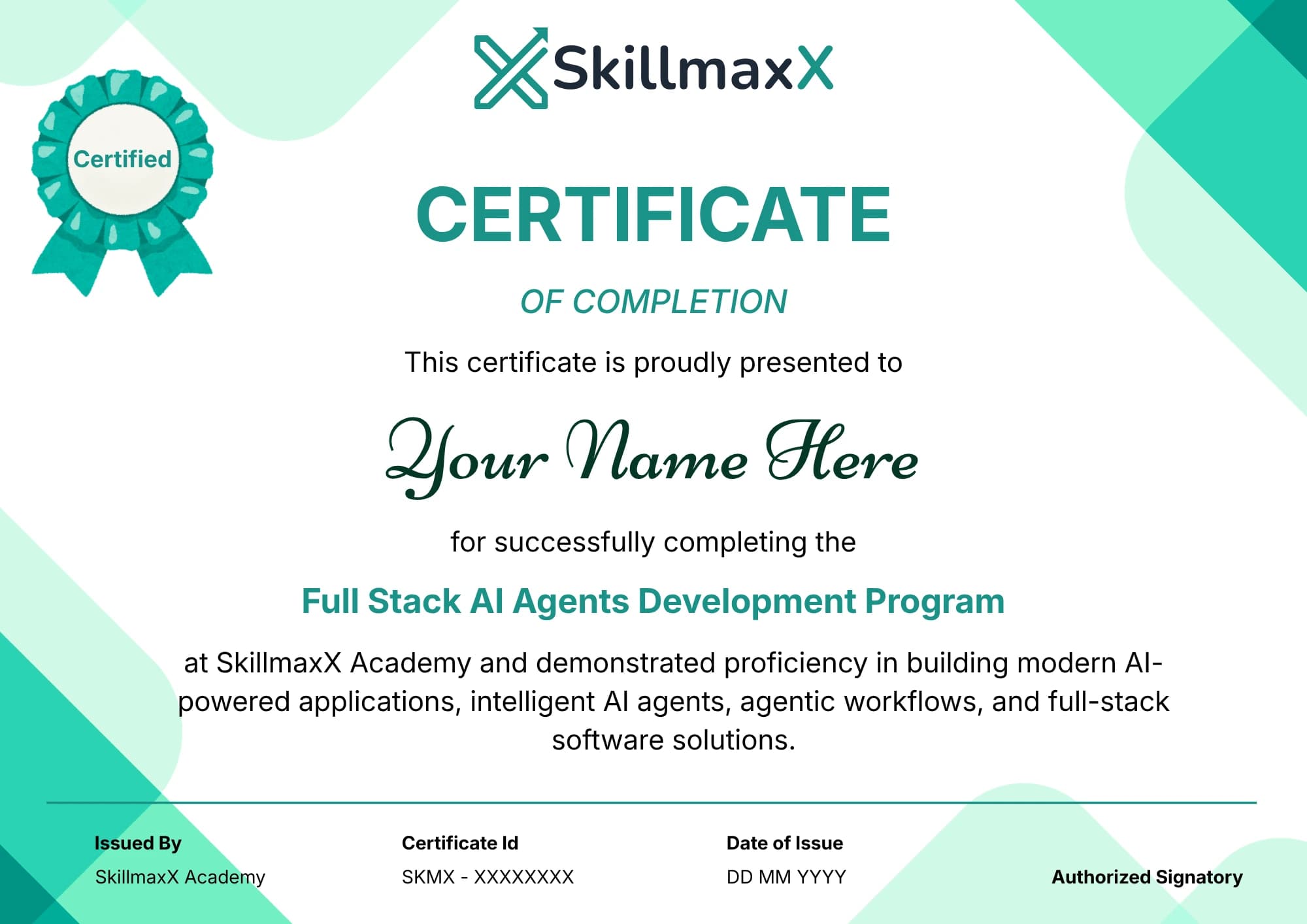
Course completion
SkillmaxX completion certificate
Complete the published learning, practical work and course requirements to receive a SkillmaxX Academy completion certificate.
The certificate records completion of the programme. Your guided builds and documented project work provide the practical evidence behind it.
Course fee
Build production AI agent applications
Course fee
₹69,999
inclusive of GST
MRP ₹1,29,999
You save ₹60,000 (46% off)EMI starting from ₹7,778/month. Eligibility and terms apply.
Your fee includes 144 live hours, twelve engineering builds, recordings, approximately one year of LMS access, project repositories and assets, capstone guidance and a completion certificate for eligible learners.
EMI options may be available for eligible learners. No payment is required to request a technical course guidance call.
Confirm technical readiness, the Python bridge, schedule and external lab costs during your guidance call.
Questions before joining
Frequently asked questions
Move beyond chatbot demos and build production AI systems
Confirm your technical readiness, understand the pre-course bridge and see how the twelve builds lead to a deployed full-stack agent product.
Prior programming exposure and sustained weekly practice are required.